5 Times This Entrepreneur Pivoted His Business to Find Massive Success

David Adderson • November 25, 2024

Daniel OSullivan

From selling burned CDs in high school to pivoting his business model multiple times, Daniel has embodied the entrepreneurial spirit from a young age. His journey has been marked by both failures and successes as he navigated the tricky waters of building a sustainable business.

Daniel's fascination with business started early. At just 12 years old, he was already dreaming up plans for his own clothing company after seeing a TV program on fashion logistics. In high school, he dabbled in small side hustles like selling homemade mixed CDs to classmates. It was clear Daniel was drawn to thinking outside the box.

After completing his business and finance degrees at university, Daniel first tried his hand at a niche travel booking agency for bachelor/bachelorette party weekends. He quickly realized the profit margins were too slim trying to bundle various parts of a trip together. However, a chance encounter with football zorbing at a music festival sparked an idea that Daniel ran with.

He bought the domain FootballZorbing.com and started listing locations and packages around the UK. Within hours of launching, inquiries began rolling in. Daniel had found a more viable business model that delivered higher profits for less work per booking. This niche activity company became the foundation for what would later become Red Cactus Events.

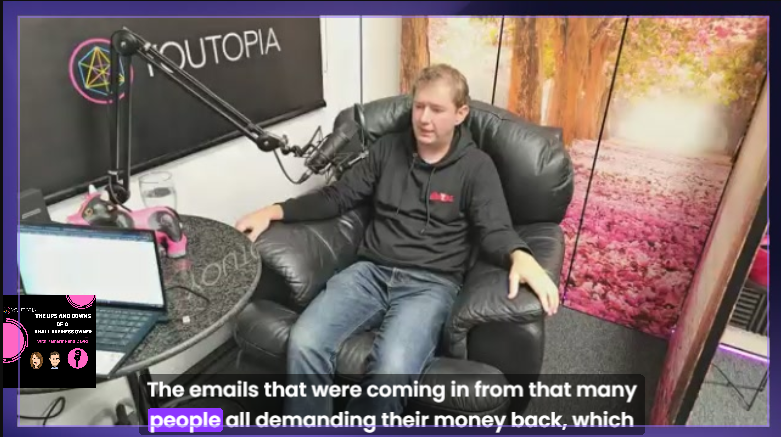
However, no entrepreneurial journey is without its fair share of pivots and disasters. When COVID-19 brought the event and entertainment industry to a screeching halt almost overnight in 2020, Daniel faced a true survival moment. With 1000+ cancellations and refunds to issue, he burned through cash reserves in weeks. But giving up wasn't in Daniel's DNA.

Sensing virtual events and entertainment would fill the void left by strict lockdowns, Daniel wasted no time building and launching a new brand called Team Building Experiences. He onboarded new entertainment vendors who could offer digital versions of their services and rode the wave of remote work Christmas parties that year. It was a game-changing pivot at exactly the right moment.

Reflecting on his biggest pieces of advice, Daniel emphasizes taking bold risks early on. Had he brought on more team members in the early days rather than trying to do everything himself, he could have grown faster. He also highlights the importance of diversification. Having all your eggs in one basket, as he did pre-pandemic, leaves you vulnerable.

In the end, Daniel's journey underscores that an entrepreneur is someone who sees obstacles as opportunities and is willing to evolve their strategy at a moment's notice to stay afloat. Rather than fear change, he encourages entrepreneurs to embrace it. After all, successfully adapting to whatever challenges arise is what separates those who thrive from those who merely survive.

What unexpected pivots or changes has your small business faced? Share your own resilience stories below!


By David Adderson July 14, 2025
In Part 1 of this series, Dr Anita Devi opened the conversation on the rising complexity of SEND and the need for intentional, values-driven provision. Her reflections focused on inclusive leadership, purposeful commissioning, and the principle that less can often be more . In this second part, I’d like to continue the conversation — but from a financial perspective. My name is Katherine Robertson. I’ve spent over 10 years working with organisations across sectors including the education sector, helping them to navigate their finances confidently and strategically. What I’ve learned over that time is simple: money follows priorities — but only when we lead with clarity . And now, with SEND needs rising faster than school income, we must work smarter than ever with the resources we have. ๐ŸŽฏ From Stockpiling to Strategic Spending In 2024, the Department for Education wrote to 64 academy trusts, concerned that some were holding onto reserves more than 100% of their annual income . These aren’t just large numbers — they are untapped opportunities. Of course, we know why these reserves exist: financial uncertainty, poor capital funding, and the understandable desire to protect future viability. But if money meant for today’s pupils is held for tomorrow’s problems , we risk doing a disservice to the very learners we aim to support. That’s why we’re asking an important question: Can schools and trusts use their reserves to strengthen inclusion and SEND support now, without compromising their long-term financial security? Our answer is yes — with the right approach. ๐Ÿงฉ Applying Financial Wisdom to Inclusive Practice We are not advocating reckless spending or draining reserves dry. On the contrary, we work with leaders to build a clear, defensible strategy for using reserves wisely , backed by robust modelling, compliance with DfE guidance, and an unwavering focus on improving outcomes for children with SEND. Together with Dr Anita Devi, we bring dual lens: educational insight and financial clarity. Here’s how we help to: โ— Identify untapped funding within existing reserves โ— Co-develop an evidence-led SEND investment plan โ— Align to DfE expectations on reserve levels and financial health โ— Build the narrative for governors, trustees, auditors and regulators โ— Support ongoing evaluation to ensure value for money and impact It’s not about spending more. It’s about spending better . ๐Ÿ”„ Releasing Funds. Reinforcing Purpose. SEND needs are not going away — and nor are the financial pressures. But when finance and inclusion experts work together, we can unlock solutions that support both pupil outcomes and institutional resilience . With careful planning, strategic reserve use can: โ— Fund early intervention โ— Invest in staff development โ— Improve provision infrastructure โ— And reduce future costs from reactive SEND placements or escalation It’s a long-term gain — and a value-led approach to financial governance. ๐Ÿ’ฌ Let’s Continue the Conversation If you’re sitting on reserves and wondering how best to use them — or if you’re just ready to rethink how your SEND resources are working for you — we’re here to help. We offer a tailored advisory service that helps schools and trusts plan, invest and lead with both head and heart. ๏ปฟ ๐Ÿ“ฉ Reach out at SEND_Finance@youtopia.co.uk to book a preliminary conversation. Because sometimes, the smartest way to save — is to spend with purpose. Author: Katherine Robertson Strategic Finance Expert and Education Consultant In partnership with Dr Anita Devi – Leading SEND Specialist
A SEND and Education Finance advisory service with photos of Dr. Anita Devi and Katherine Robertson, experts.
By David Adderson July 4, 2025
Optimize spending for better SEND outcomes. Contact Youtopia Ltd for expert finance support in Milton Keynes.
By David Adderson February 24, 2025
Starting and growing a business is no easy feat.
By David Adderson January 26, 2025
Ever wondered how a small business survived by pivoting from exhibitions to outdoor cinemas during the pandemic?
By David Adderson October 28, 2024
Discover the unexpected source that helped a small business owner overcome burnout. It's not what you think. Stay tuned for the surprising twist!
Two men are sitting at a table in front of microphones.
By David.Adderson (David Adderson) July 26, 2024
Running a small business is no easy feat.
A woman is sitting in front of a microphone next to a stuffed cow.
By David.Adderson (David Adderson) July 26, 2024
Finding balance as a working parent can feel like an impossible tightrope walk.
A woman in a pink suit is standing in front of the tower bridge.
By David.Adderson (David Adderson) July 26, 2024
This is a subtitle for your new post
A purple background with the words mixxos leading the way in talent solutions
By David.Adderson (David Adderson) July 26, 2024
Gemma Downing is no stranger to adversity.
Two men are sitting at a table in front of a microphone.
By David.Adderson (David Adderson) July 26, 2024
How can small business owners navigate the inevitable ups and downs of entrepreneurship and avoid the spectre of insolvency that looms over so many ventures?